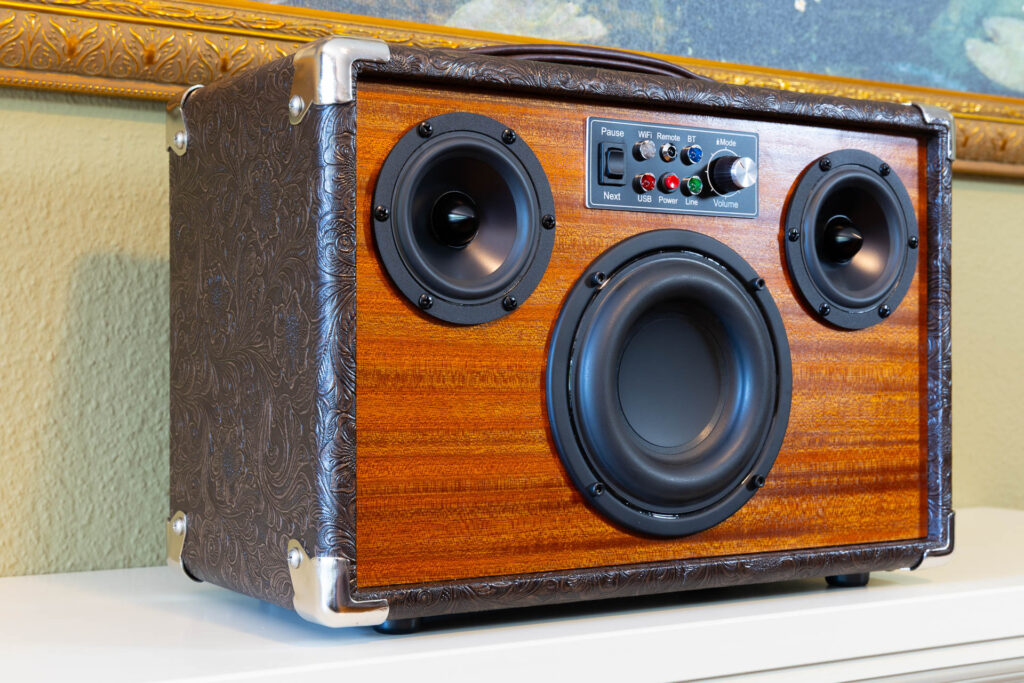
Disclaimer: In this post, I present a project that I finished successfully. However, it is not meant as a detailed construction manual. The description may be incomplete and might even contain errors. Feel free to use it as an inspiration for your own project but scrutinize the information presented here and use your common sense. Build at your own risk!
The boombox will contain two fullrange speakers and one subwoofer. If fullrange speakers (or midrange speakers or tweeters) and a subwoofer are installed in the same cabinet, it is always a good idea to use separate, sealed compartments for acoustic isolation. Otherwise, the massive air movement produced by the subwoofer will interfere with the fullrange speakers, resulting in distortion and muddy sound. To prevent this, I built two separate speaker compartments, one for each fullrange speaker. Each has a volume of about one liter.
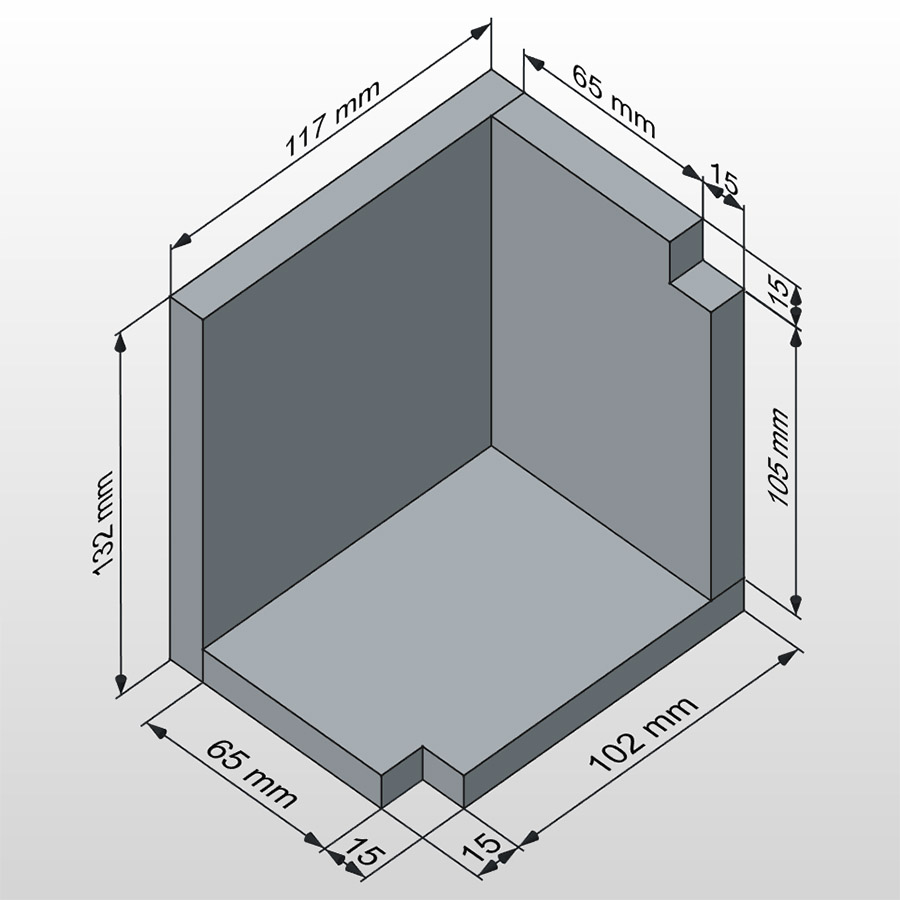
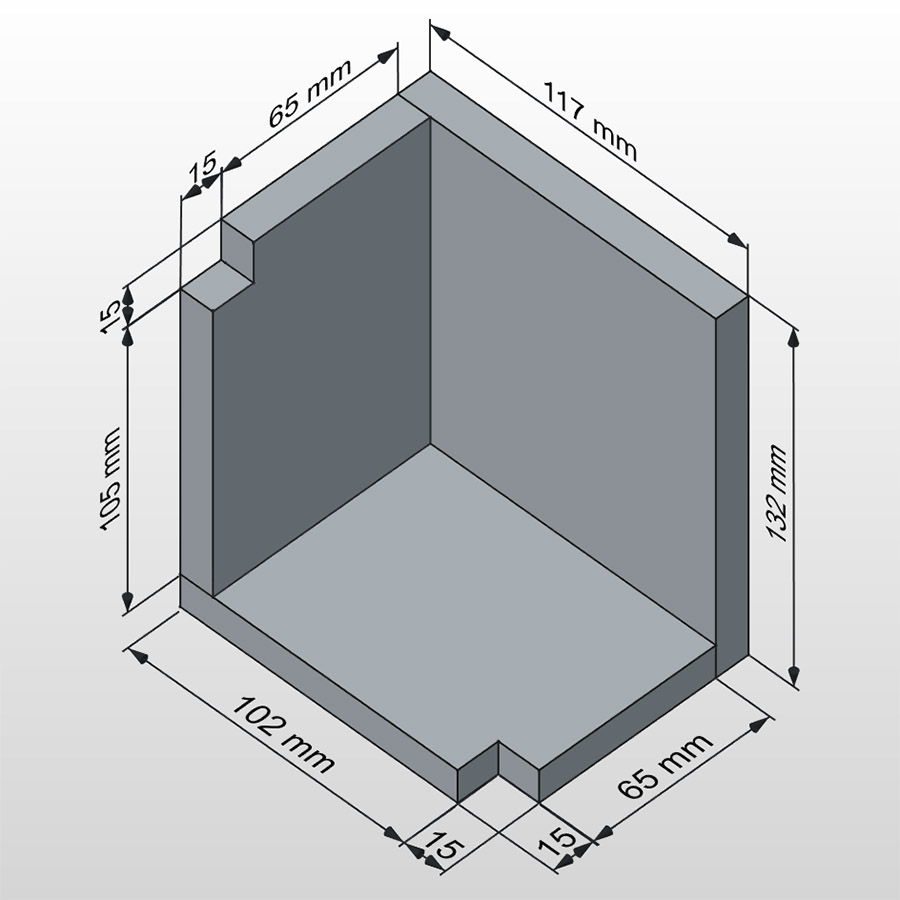
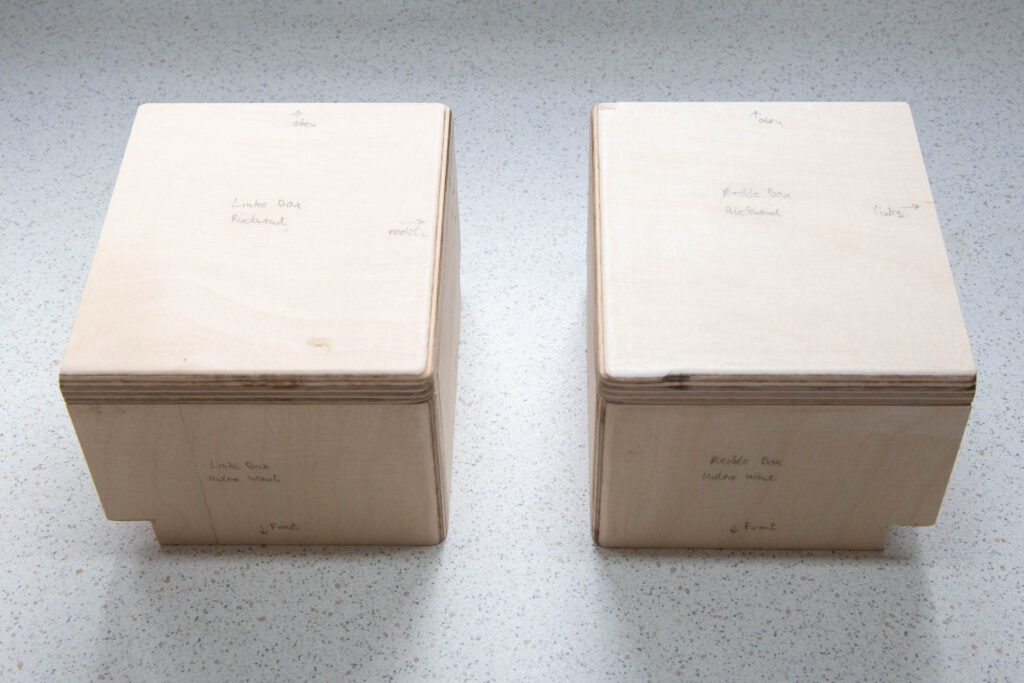
The two compartments are made of 12mm birch plywood:
- 2x back piece: 132x117x12mm
- 2x side piece: 120x80x12mm
- 2x bottom piece: 117x80x12mm
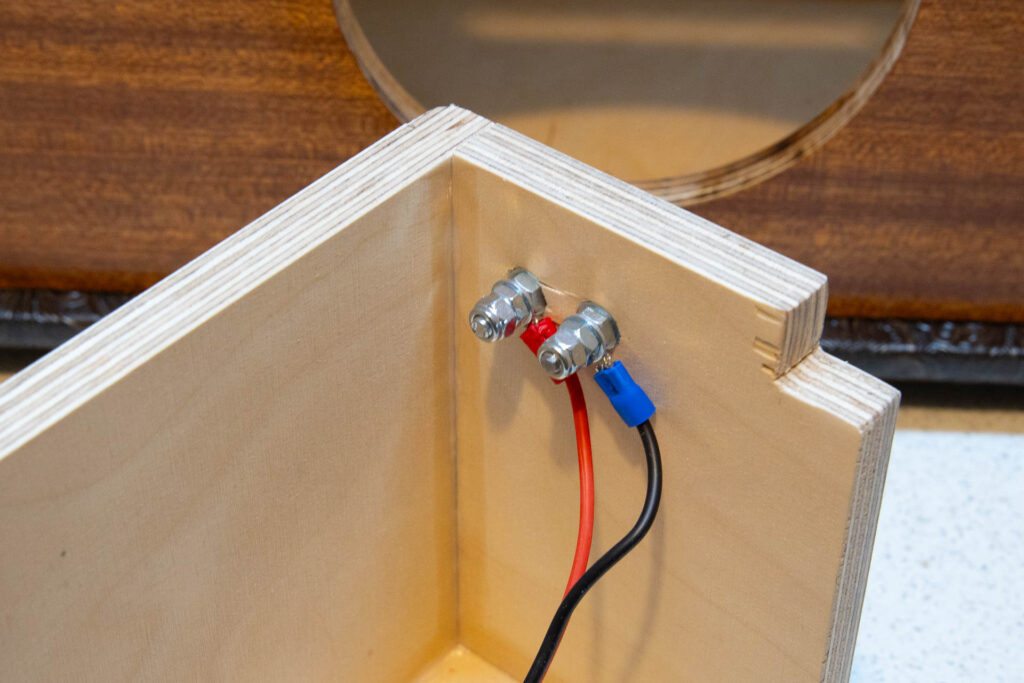
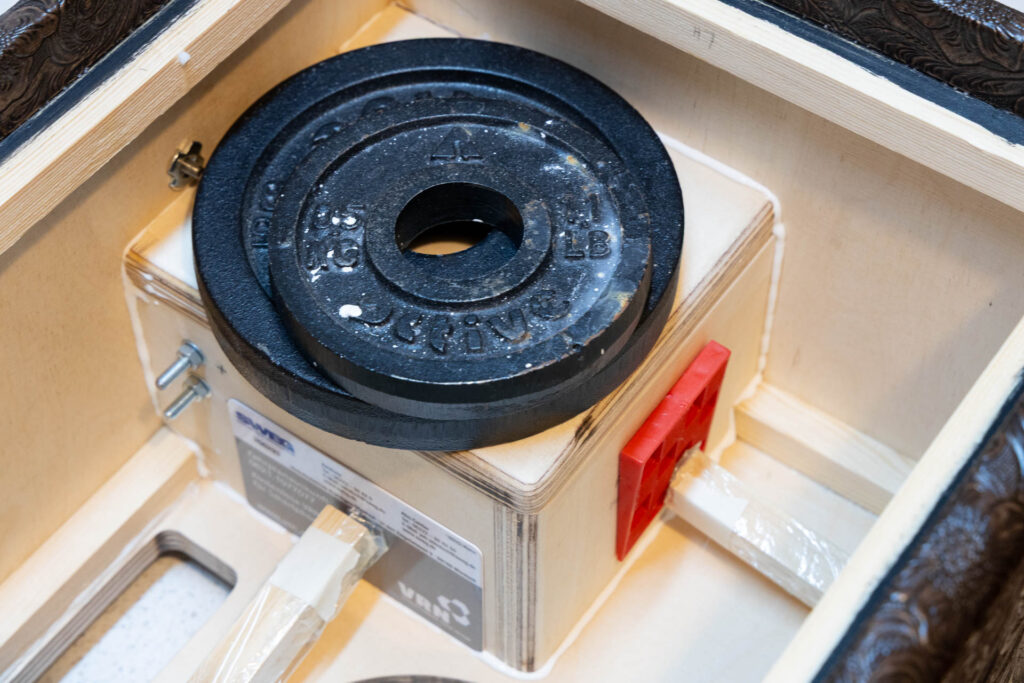
The side and bottom pieces get a 15x15mm cutout in one corner for the wooden strips we already glued into the cabinet. I glued the compartments together, each consisting of a back piece, a side piece, and a bottom piece. Although it is probably not necessary, I then rounded off the edges of the compartments with a router. To connect the speakers to the amplifier in a later step it is necessary to feed the speaker cable (I used AWG16) into the compartment. Since the compartments will be sealed after installation with only a cutout on the front of the cabinet, some kind of cable bushing is needed. I decided to drill two holes in the side piece of each compartment and insert a 40mm piece of a M4 threaded rod into each, screwed from both sides. This way, I could connect speaker cables both inside and outside the compartment, using the rod both as attachment point and electrical conductor. Important: The speaker cables that will later connect the speakers to the inner side of the rod have to be connected there before the compartments are glued into the cabinet! There is no chance to do this afterwards. The cables should be long enough so that they extend beyond the front of the cabinet by at least 5cm.
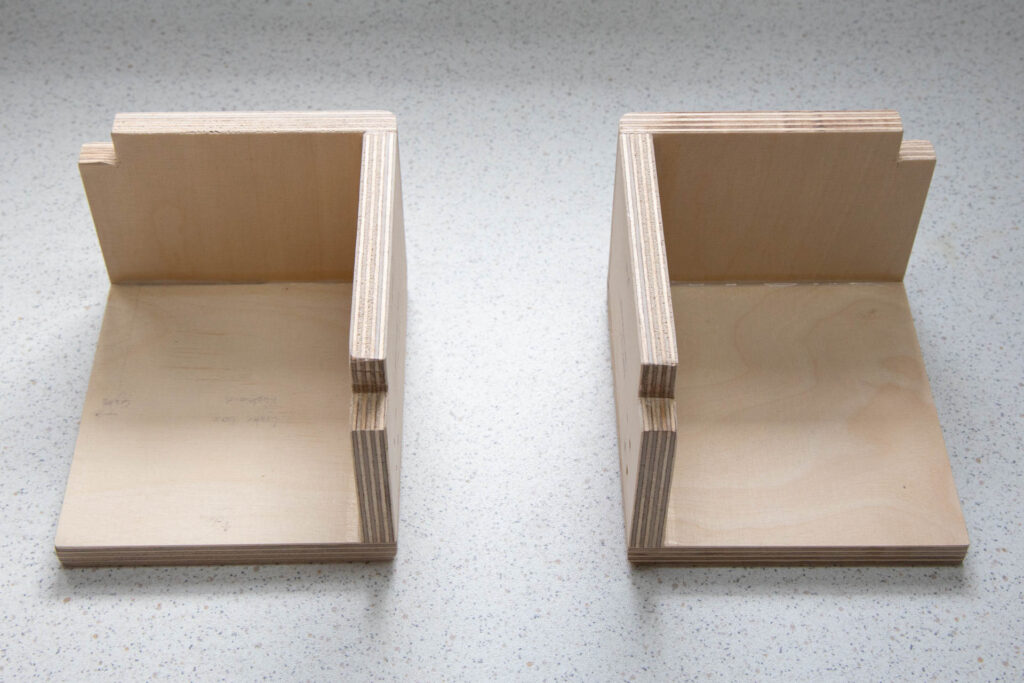
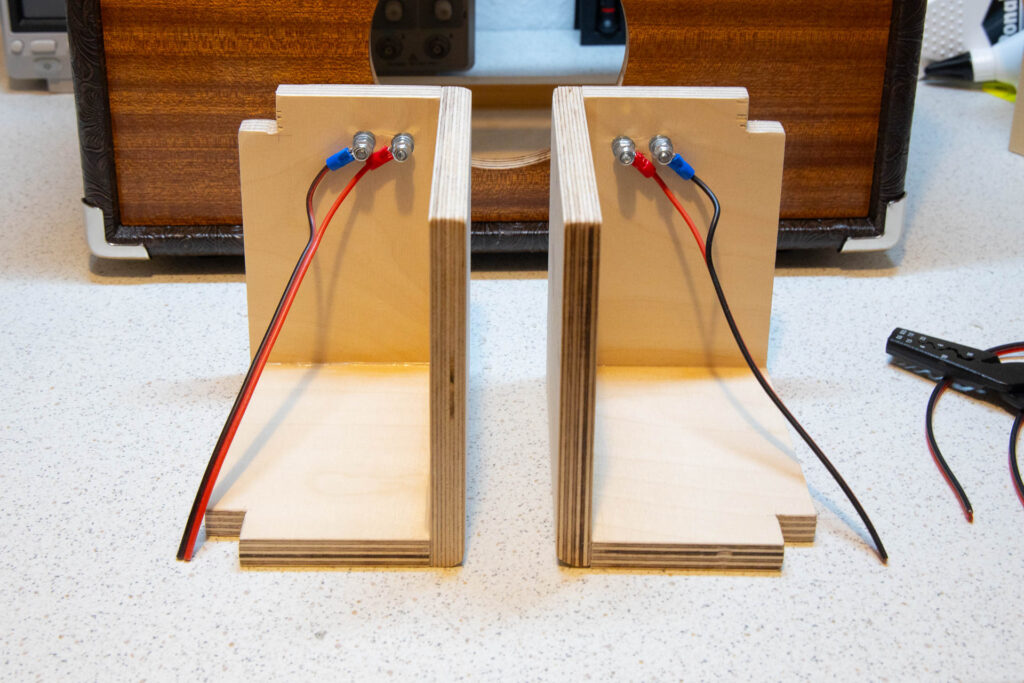
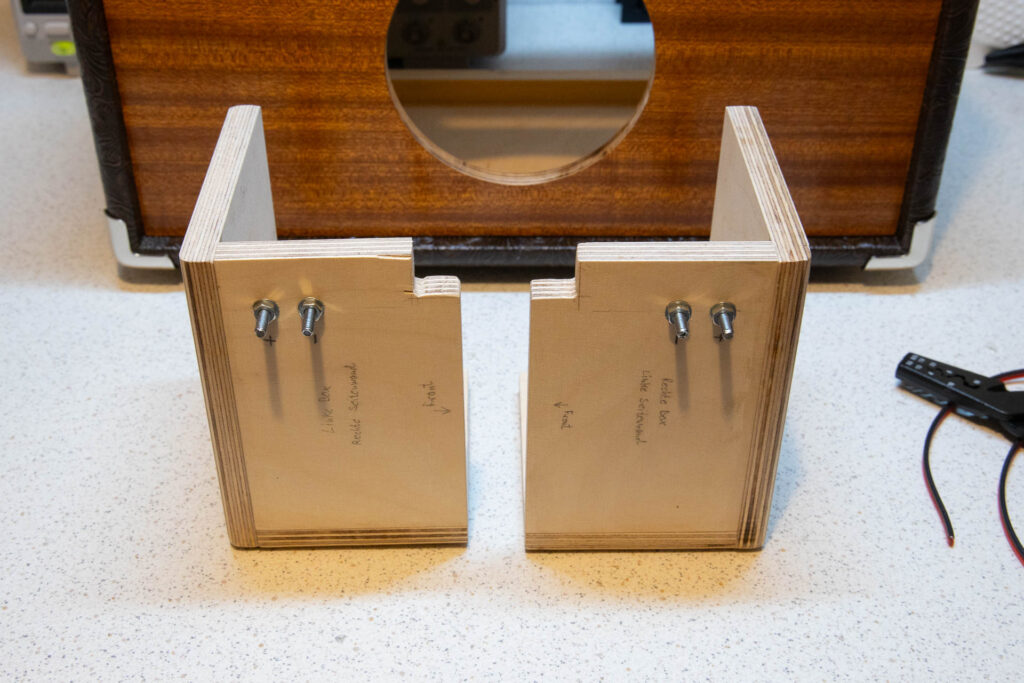
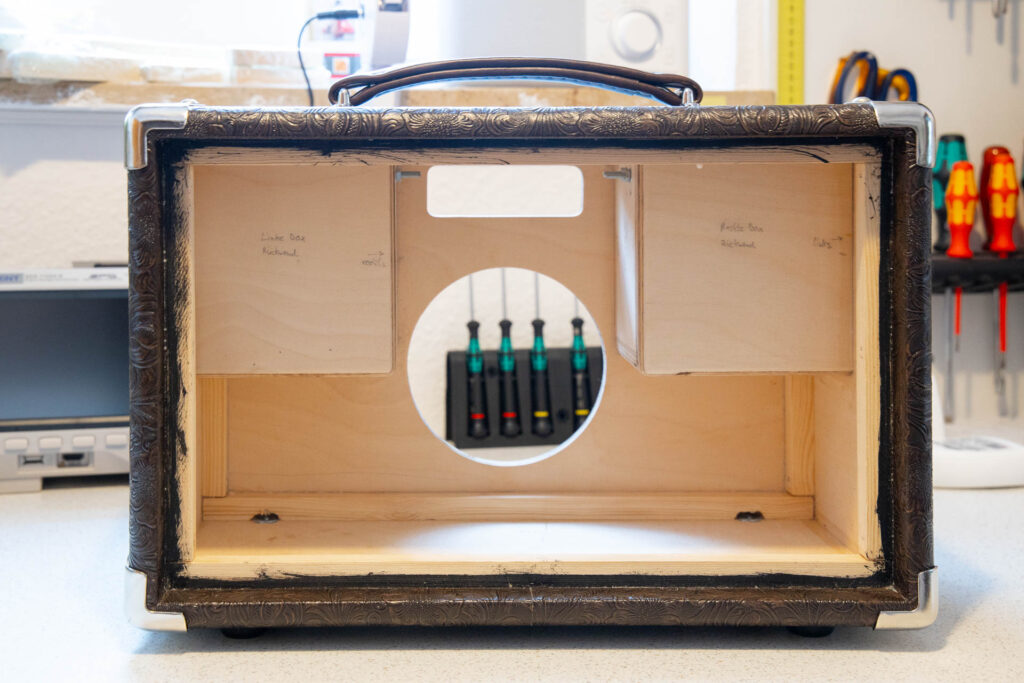
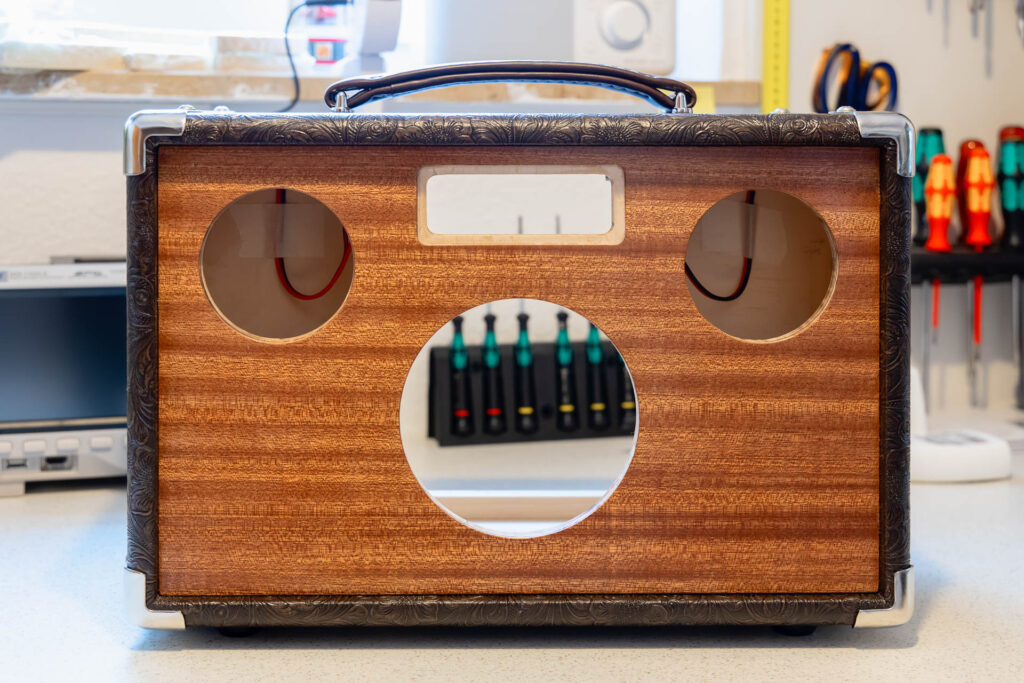
Finally, I glued both speaker compartments into the cabinet. By using plenty of glue, I made sure that the speaker compartments were airtight.
In the next post, I will describe the amplifier I used and how I installed it into the cabinet.